Your Brain Can Heal.
We Help It Get There.
The nervous system has a remarkable capacity to rewire, adapt and recover. Our neurological rehabilitation programme works with that capacity - using evidence-based, hands-on therapy to restore movement, independence and confidence after stroke, brain injury or neurological disease.
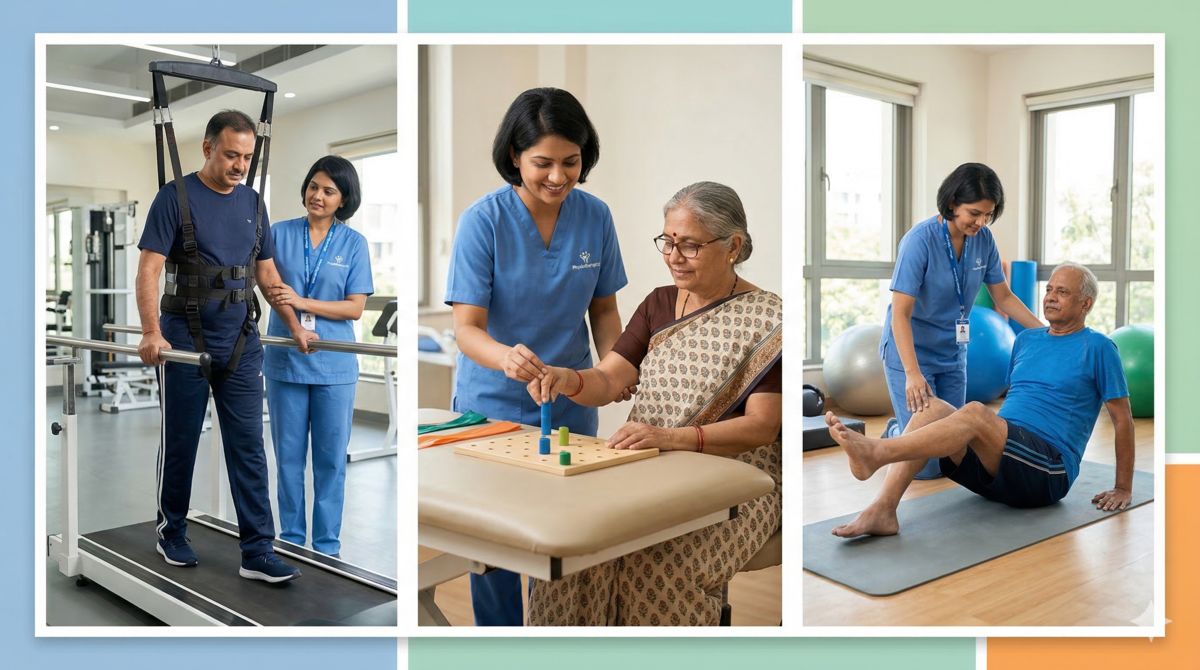
Conditions We Treat
Neurological Conditions We Specialise In
Neurological conditions affect how you move, balance, speak and live. Our rehabilitation is designed to work with your nervous system's own healing capacity - rebuilding function carefully, consistently and with compassion.
Stroke Recovery
Structured, early and ongoing rehabilitation to restore movement, strength, balance and function after ischaemic or haemorrhagic stroke at any stage of recovery.
Parkinson's Disease
Specialised movement therapy to manage rigidity, tremor, gait and freezing episodes - improving quality of life and helping patients maintain independence for longer.
Traumatic Brain Injury
Rehabilitation following head injury - addressing motor deficits, balance impairment, cognitive-motor integration and the gradual rebuilding of functional independence.
Spinal Cord Conditions
Physiotherapy for spinal cord injuries and myelopathy - maximising preserved function, preventing secondary complications and supporting the highest level of independence possible.
Multiple Sclerosis
Fatigue management, strength and mobility training, balance rehabilitation and fall prevention for people living with MS - adapted to the fluctuating nature of the condition.
Balance Disorders & Peripheral Neuropathy
Vestibular rehabilitation, gait retraining and balance therapy for patients with dizziness, unsteadiness and nerve-related weakness affecting mobility and fall risk.
Neuro Conditions Stroke, Parkinson's & More
How We Treat
Three Pillars of Neurological Recovery
Neurological rehabilitation is not about pushing through exercises. It is about working intelligently with your nervous system - building new pathways, restoring real-world function and protecting your quality of life every step of the way.
Comprehensive Neurological Assessment
Before any treatment, we assess gait, balance, muscle tone, coordination, sensation and functional movement patterns in detail. Understanding exactly what your nervous system is doing - and not doing - is the foundation of every effective neuro rehab programme. Nothing is assumed. Everything is tested.
Hands-On Therapy & Neuroplasticity Training
Neuroplasticity is your brain's ability to form new connections and rewire around damaged areas. Our therapy actively drives this process through repetitive, task-specific movement, manual facilitation and sensory stimulation - hands-on techniques that signal new patterns to your nervous system and reinforce them with every session.
Functional Rehabilitation & Independence
The ultimate goal of neurological rehabilitation is not scores on an assessment chart - it is the ability to live your life. We train real-world activities: walking safely, managing stairs, using your hands, getting in and out of bed. Every exercise connects to a daily function you want to reclaim.
What Recovery Looks Like
What Our Patients Regain
These are not clinical benchmarks. These are the moments our patients describe as the ones that matter - the milestones that mark the return to a meaningful life.
Walk Independently Again
Taking those first unassisted steps - across the room, down the corridor, into the garden. For many patients, this is the defining moment of their recovery.
Use Your Hands and Arms
Reaching, gripping, writing, self-care. Regaining upper limb function after stroke or brain injury restores a level of autonomy that deeply affects quality of life.
Live Safely at Home
Managing daily routines at home - cooking, bathing, moving between rooms - without constant dependence on a carer or family member.
Reconnect with Family
Being present - physically and emotionally - for the people who matter most. Neurological recovery gives patients back not just function, but relationships.
Rebuild Confidence
The fear of falling, of struggling in public, of being seen as diminished. As function returns, so does confidence - and with it, a willingness to engage with life again.
Manage Long-Term Conditions
For progressive conditions like Parkinson's and MS, the goal is maximising function and independence for as long as possible - with a therapist who adapts your programme as your needs change.
Why Physio Aalaya
What We Believe About Neurological Recovery
Recovery Has No Deadline
The common belief that recovery plateaus after six months post-stroke is not supported by the evidence - and it is not something we accept in our clinic. Neuroplasticity continues well beyond the acute phase. We have seen patients make meaningful gains a year or more after their injury when given the right stimulus and the right guidance. We will never tell you that time has run out.
The Best Therapy Is Deeply Personal
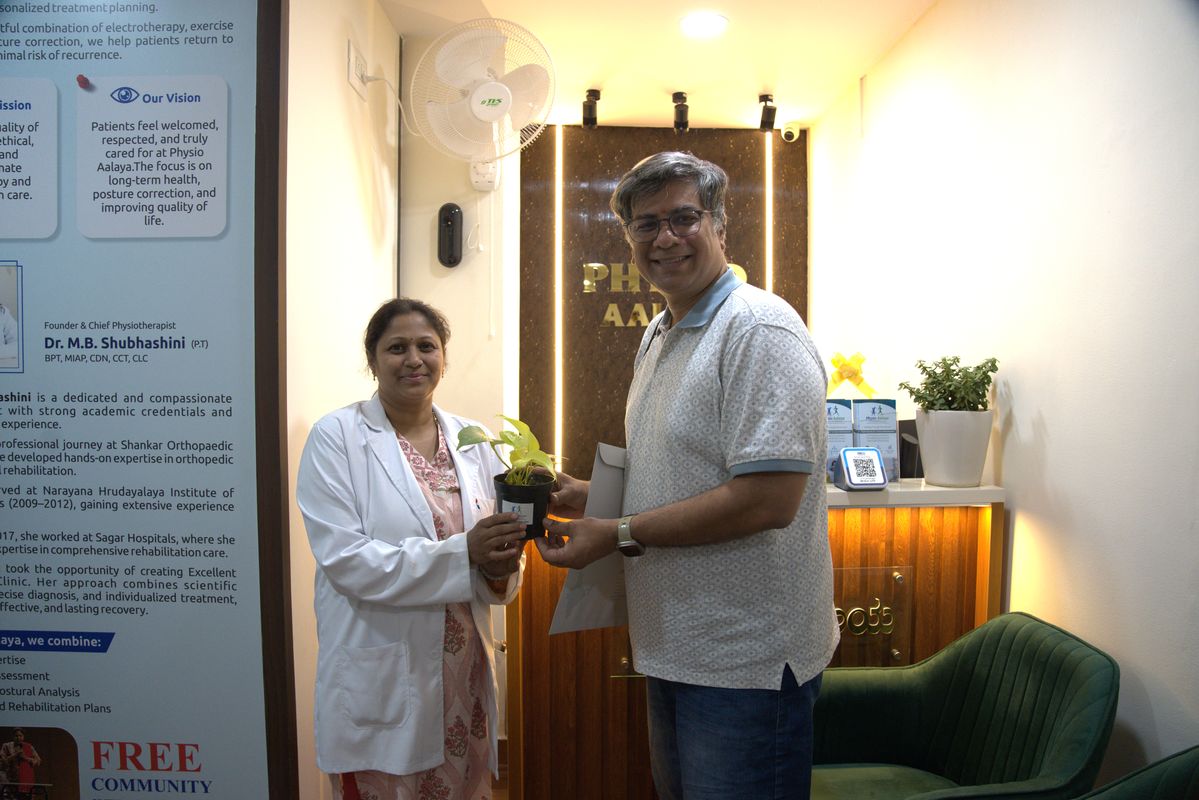
No two neurological patients are the same - not in their deficits, not in their goals and not in what motivates them. A programme designed for someone else will never work as well as one designed for you. Every patient at Physio Aalaya receives an individual assessment, an individual plan and the individual attention of Dr. Shubhashini in every single session.
Family Is Part of the Recovery
Neurological rehabilitation does not happen only in the clinic. The hours spent at home - practising, moving, being encouraged - are just as important. We actively involve family members and caregivers, teaching them how to support therapy safely at home so that recovery continues every day, not just on session days.
FAQs
Questions About Neurological Rehab
Honest answers from our clinical team.
As soon as medically stable - ideally within 24 to 48 hours of stroke onset in a hospital setting. Early mobilisation has been shown to significantly reduce complications and improve recovery outcomes. Once you are discharged, outpatient rehabilitation should continue without delay. At Physio Aalaya, we see post-stroke patients at all stages - from days after hospital discharge to months or years post-event - and meaningful progress is achievable at every stage.
No - it is not too late. The brain retains neuroplasticity - the ability to rewire and form new connections - for a significant period beyond the acute phase. Research and clinical experience consistently show that structured, intensive physiotherapy can produce meaningful functional gains months and even years after stroke. If you or a family member received limited rehabilitation initially, please do not assume the opportunity has passed. Come in for an assessment and we will give you an honest picture of what is possible.
Yes - physiotherapy plays a vital role in Parkinson's disease management. While it cannot stop the progression of the condition, regular physiotherapy can significantly slow the decline in mobility and independence. We focus on gait training to reduce shuffling and freezing, balance and fall prevention, maintaining flexibility and posture, and helping patients stay as active as possible for as long as possible. Regular physiotherapy also has well-documented benefits for mood and quality of life in Parkinson's patients.
There is no single answer to this - it depends entirely on the condition, the severity, the time since injury and your individual response to therapy. Acute post-stroke rehabilitation may be intensive for 3 to 6 months, followed by a maintenance programme. Progressive conditions like Parkinson's and MS are managed on an ongoing basis, adapting as the condition evolves. After your initial assessment, we will provide a realistic, personalised timeline with clear goals so you always know what to expect at each stage.
Absolutely - we actively encourage this. Family members and caregivers are a critical part of neurological recovery. We take time to teach carers safe handling techniques, home exercise programmes and ways to encourage movement and practice in the patient's daily routine. Recovery does not stop when the patient leaves the clinic - and with the right guidance, family members can make an enormous positive difference to overall outcomes.
Begin Your Recovery
Recovery Starts With a Single Step
Whether you are newly diagnosed, recently discharged or have been living with a neurological condition for years - it is never too early and never too late to begin. Let us show you what is possible.